Pages

Showing posts with label communication. Show all posts

Sunday, September 22, 2013

Seven Tips to Increase Your Emotional Intelligence & Reduce Angry Outbursts

• Master the use of assertive communication: Substitute “I messages” in place of “You messages”, i.e., “I feel angry” as opposed to “You make me so mad.”  Stop blaming your partner.  You are responsible for your feelings. Own them!
• Practice active listening: Quite simply put, stop talking, stop reacting, and listen! Instead, ask yourself, what is my partner really saying? What is the underlying need that is clearly not being met, and most likely the root of the concern? How can I support my partner to meet the need?
• Learn to use empathy to connect emotionally with others: Demonstrate awareness and concern for the needs, wants, and desires of loved ones. Instead of focusing only on yourself, consider how friends and family might be feeling.
• Commit to self-control at all times:  Self regulation! Take ownership of your role in the relationship. Own your own actions, choices, and behaviors. Following any emotional situation, ask yourself what went well, and what can I do differently the next time?
• Practice monitoring your feelings frequently during the day: Check in with yourself. How do I feel? Am I tense? Do I have knots in my stomach? Are my fists clenched? Am I grinding my teeth? Are my shoulders tight? Do I feel hot? If you answer yes to any of the above, take a ten minute time out and do some slow deep breathing, count backwards from ten, or run your hands under cold water while slowly breathing in through your nose and out through your mouth.
• Learn to sense the feelings and needs of others: Pay attention to your friends, family, and loved ones. Do they appear upset? Sad? Hurt? Are there needs being met? Life is never one sided. Everyone has needs, and when needs are not met they become resentments that turn to anger that may be expressed inappropriately or drive a wedge between you and your loved one.

• Learn to lead by example: Demonstrate the behaviors, communication style, and way of being in the world you want to see more of from your friends, family, and loved ones. We cannot expect anyone to interact differently than we ourselves are displaying on a daily basis. Become the change you want to see!

Monday, April 1, 2013

Understanding The Connection Between Emotional Intelligence & Anger


Emotional intelligence is a relatively new concept which holds considerable promise in teaching us the skills to relate to each other which leads to positive outcomes in many areas of human interaction. Currently it is the newest rage in Human Resource and Organizational Development consultation and training. 

Emotional intelligence (EQ) is the capacity to create positive outcomes in relationship to others and ourselves. It is the practice of being aware, understanding, appropriately expressing and handling emotional states in ourselves and others. Emotional intelligence is an important skill to acquire because of its usefulness in leadership, sales, marriage and interpersonal relationships at work, school and families. It is a skill which can be developed and/or enhanced at any point in our lives.  

Because EQ is essential in developing relational skills it is one of the first concepts to be taught in mainstream anger intervention programs, and is a core concept of which anger management tools are built upon. Additional components in anger education include stress management, communication and anger management. All of these four key concepts are woven throughout the intervention process, and are introduced via direct instruction, group exercises, videos and CDs. Consequently, this helps to teach participants not only how to regulate their anger, but also how to manage stress and improve communication while simultaneously enhancing their emotional intelligence.

Often times individuals initially enroll in anger management class as a result of a referral from court, Human Resources, Employee Assistance Programs, or spouse. However, once in the class, he or she will quickly recognizes the value of using these skills in all other aspects of his or her daily functioning. EQ is by far the most popular of the four modules mentioned above. EQ is closely related to empathy, sensitivity to others, compassion and self awareness. It is what distinguishes persons who make you feel comfortable, optimistic, laugh and feel good about yourself from those who you avoid because their negativism is contagious and tends to cause you to feel gloom and discomfort.

Currently, in the United States, Canada , England and Bermuda, the largest number of non court related referrals to anger management programs are from businesses, and governmental agencies, including Hospitals. These organizations recognize the effect of relational challenges on the bottom line i.e., productivity, profit, and good morale. Understanding the powerful role of emotions in the workplace sets the best leaders apart from the rest not just in tangibles, such as better results and the retention of talent, but also in the all-important intangibles, such as higher morale, motivation, and commitment.

In fact, just as laughter offers a ready barometer of EQ at work so to does rampant anger, fear, apathy, or even sullen silence signals the opposite.  In a recent informal survey of more that a thousand U.S. workers, over 40 percent reported incidences of yelling and other kinds of verbal abuse in their workplaces, and approximately 32 percent admitted to having yelled at a co-worker themselves. Such disturbing encounters wreak havoc emotionally, as demonstrated via negative physiological responses such as increased stress levels, more frequent accidents, etc. Verbal attacks send the painful emotional messages of disgust, or contempt, thus emotionally hijacking the person targeted, particularly when the attack is a spouse or boss, whose opinions carry much weight.

Monday, March 18, 2013

How To Communicate Anger In A Healthy Way

Effective communication is a key ingredient in managing anger and stress. However, because people tend to communicate their anger in one of two ways, aggressively or passively, effective communication does not always occur. Despite what you might think, the vast majority of people suppress their anger and wind up carrying it around in the form of resentment. This approach is unhealthy and unproductive. Consequently, in order to communicate anger in a healthy way you need to translate your upsetting thoughts into words and actions that are not offensive to the people around you. In other words, you need to express exactly how you feel, in a way that takes other people’s feelings into consideration.


Keeping in mind that there are four styles of communication, it is important to realize that most of us use different ways of communicating depending on the situation, our mood, and the behavior of the person with whom we are attempting to communicate. The four styles are as follows:

Passive communication: The passive communicator avoids direct eve contact, fails to accurately express his or her feelings, and tends to have low self-esteem. His or her anger is self-directed rather than toward the source of the anger.

Passive-Aggressive communication: The passive aggressive communicator sounds passive but is hostile in his or her manner of speaking. He or she will often use sarcasm and other hostile gesture to get a point across. The listener is left without any indication of what the passive aggressive communicator needs or wants.

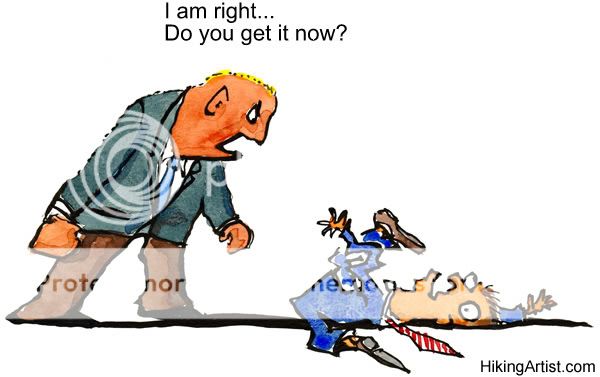
Aggressive communication: The aggressive communicator invades the space of the listener and speaks in a threatening manner and may even throw objects, glare, or attempt to intimidate the listener. He or she often attempts to blame the listener for whatever the source of the disagreement may be.

Assertive communication: the assertive communicator speaks in a reasonable tone, establishes eye contact with the listener, uses “I” messages, and clearly states his or her needs, feelings, and requests. He, or she, invites the listener to work towards a mutually satisfactory resolution of the conflict. The assertive communicator consciously influences the listener by his or her own behavior. He or she demonstrates emotional intelligence skills.

In reviewing the four styles of communication, it becomes clear that assertive communication is the most effective manner of communication when attempting to express feelings. The following is an outline of how to effectively communicate anger:

First, state your position using “I” statements, such as “I feel upset when you yell at me my in front of my coworkers.” Remember to be mindful of “you” statements like: “You shouldn’t criticize me in front of co-workers,” or “You make me angry,” and avoid them completely. You are communicating your feelings; therefore, you must take ownership of them by using “I”. When at all possible, substitute any other word for the word “angry” since this word is such a button-pusher. Use words like hurt, upset, confused, or disappointed. By always formatting your opening statement in this way you will prevent an immediate counter-attack that would prevent your message from being heard.

In his book, Anger at Work, Dr. Hendrie Weisinger reveals three secret weapons for effectively communicating anger: Listening, Negotiation, and Praise.

Listening: Once you make your opening statement (I feel upset when…), listen to what the other person has to say in response. When you listen attentively, you validate the other person’s feelings. You can add to this sense of validation by saying, “I can understand why you would feel that way…?” Please keep in mind that sometimes, even when you carefully format your opening statement, the other person may still counter-attack. If this happens, just keep restating your position until the person responds appropriately.

Negotiation: When you’re angry, it’s hard to concede anything to the person you are angry with. You will be more likely to get what you want in the long run if you come to the table prepared to make some kind of concession.

Praise: Praising the person you are angry with may seem like a contradiction, but, if done properly, it will take the edge off your criticism. For example: “I appreciate how quickly you got that letter out, but next time you type a letter, please run it by me before mailing it.” Mixing in a bit of praise, as long as it is sincere, lets the person know you care about him or her.

For further information about communicating anger in a healthy way, please visit our website at www.nvamc.com, or call us at 1-888-992-6479 today.

Tuesday, December 25, 2012

Anger: A Normal Human Emotion

Per George Anderson, LCSW, anger is a normal human emotion. Consequently, our anger is one of the  first indications that we have sustained an emotional injury that causes us to feel, hurt, offended, attacked, frightened or sad. This is not an uncommon response to more vulnerable feelings. In fact, anger even has a positive side to it. Some examples of the positive uses of anger include Martin Luther King and his struggles to end discrimination in America, Nelson Mandela (www.nelsonmandela.org) whose struggle against South Africa mobilized most of the world against his adversaries, and Rosa Parks whose anger was the source of the Montgomery Bus Boycott. Another example of a positive outcome in sighted by anger is that of Mahatma Gandhi, whose anger and resulting passive resistance stance against England occurred in direct response to Britain’s domination of India.


However, anger also has very negative connotations, and is often associated with unhealthy and abusive aspects of the human condition. Anger maybe considered a problem when it is too intense, occurs too frequently, is harmful to self or others, lasts too long or leads to aggression. Unfortunately, as the economy continues to struggle and the cost of living remains astronomical, there has been an increase in unhealthy anger and aggression worldwide. This increase is visible across all sectors of our society including government, politics, professional sports, business, education, and medicine.

Therefore, emotional intelligence may no longer be effectively managed at the individual or family level, but may require voluntary and mandated training in stress management, anger management, communication and impulse control.

For more information about managing stressful emotions, please visit our website at www.nvamc.com, or call us at 1-888-992-6479.

Sunday, February 12, 2012

The "Anger Trap"


Avoiding the "Anger Trap" is an important skill to have in your communication tool box, and is one that is often over looked. Navigating the slippery slope of interpersonal relations is never easy, but with a little help you will be stirring the communication course like a pro.
 An "Anger Trap" is the emotional mine field of any interaction that involves one party being denied something that they want. Yes, this happens all the time, all over the world, in ever aspect of life from the home to the cooperate board room. The result of getting caught in one of these traps, most especially in the business world, can often be a fast trip to anger management class. So what is the infamous trap, and how do you avoid it? An "Anger Trap" is sprung when the party being denied is able to hook the denier into justifying the denial and in so doing begins to exploit the deniers guilt. At this point, the denier becomes angry in response to the emotions associated with the guilt, and thus a successful 'anger trap' has been sprung. Avoiding the trap then becomes a matter of the denier being able to establish clear boundaries and effectively managing their communication of the denial. In short, the denier must avoid engaging in explanations by using clear, concise commands coupled with immediate disengagement from the conversation. This does not mean forgoing politeness, but it does mean remaining in control of the conversation. For more information about our services including anger management, interpersonal communication, stress management, avoiding the "Anger Trap", emotional intelligence, etc., please visit our website at www.nvamc.com or call 888-992-6479.