Showing posts with label angry outburst. Show all posts
Showing posts with label angry outburst. Show all posts
Monday, March 24, 2014
Good Self Care Reduces Anger
Good Self Care Reduces Angry Outbursts
Self-care is a critical part of overall good health, but it is also a key component in managing our emotions. When self-care is neglected, one of the first warning signs is increased irritability and anger towards family and friends. In fact, successfully managing angry outbursts often depends on how well we manage our day to day responsibilities. Good self-care means good stress/anger management. Consequently, balance in all areas of day to day life is often the key.
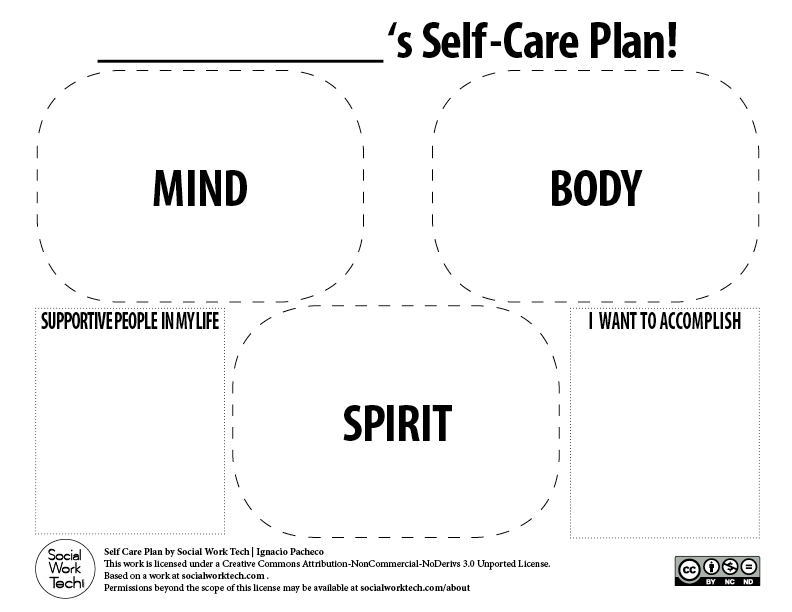
Below is a self-care plan template published by Social Tech.Com. Notice the three areas of focus are the mind, body, and spirit. These represent the three domains of life (work/home/relationships). To achieve a healthy balance, equal attention and nurturing must be given to all three areas. Too much stress, or too much time devoted to any one area can cause increased stress and lead to anger, irritability and outbursts.
For more information regarding anger management, stress management, and self-care please feel free to visit our website at www.nvamc.com or call 1-888-992-6479.


Monday, December 9, 2013
Is It Normal To Feel Angry?
Is anger normal? Absolutely! Everyone feels angry. It’s what we do with the feeling of anger that matters. Per George Anderson, LCSW, anger is a normal human emotion. In fact, anger is one of the first indications that a person may feel emotionally injured. It is important to note that anger is a secondary emotion that exists to protect people from feeling the more vulnerable emotions such as hurt, loss, grief, fear, offended, attacked, frightened, lonely or sad. This is not an uncommon response, often initiated by our psyche during times of stress in response to the more sensitive feelings.

However, anger also has very negative connotations, and when out of control is often associated with unhealthy and abusive aspects of the human condition. Anger maybe considered a problem when it is too intense, occurs too frequently, is harmful to self or others, lasts too long or leads to aggression. Unfortunately, as the economy continues to struggle and the cost of living remains sky high; incidents of unhealthy anger and aggression have increased ten fold worldwide. This increase is visible across all sectors of our society including government, politics, professional sports, business, education, and medicine.
If you or someone you love is experiencing unhealthy levels of anger or aggression, their emotional intelligence may no longer be effectively managed at the individual or family level, and may require voluntary and mandated training in stress management, anger management, communication and impulse control.
For more information about managing stressful emotions, please visit our website at www.nvamc.com, or call us at 1-888-992-6479.
Sunday, September 22, 2013
Seven Tips to Increase Your Emotional Intelligence & Reduce Angry Outbursts

• Master the use of assertive communication: Substitute “I
messages” in place of “You messages”, i.e., “I feel angry” as opposed to “You
make me so mad.” Stop blaming your
partner. You are responsible for your
feelings. Own them!
• Practice active listening: Quite simply put, stop talking, stop reacting, and listen! Instead,
ask yourself, what is my partner really saying? What is the underlying need
that is clearly not being met, and most likely the root of the concern? How can
I support my partner to meet the need?
• Learn to use empathy to connect
emotionally with others: Demonstrate awareness and concern
for the needs, wants, and desires of loved ones. Instead of focusing only on
yourself, consider how friends and family might be feeling.
• Commit to self-control at all
times: Self regulation! Take ownership
of your role in the relationship. Own your own actions, choices, and behaviors.
Following any emotional situation, ask yourself what went well, and what can I
do differently the next time?
• Practice monitoring your feelings
frequently during the day: Check in with yourself. How do I
feel? Am I tense? Do I have knots in my stomach? Are my fists clenched? Am I
grinding my teeth? Are my shoulders tight? Do I feel hot? If you answer yes to
any of the above, take a ten minute time out and do some slow deep breathing,
count backwards from ten, or run your hands under cold water while slowly
breathing in through your nose and out through your mouth.
• Learn to sense the feelings and
needs of others: Pay attention to your friends,
family, and loved ones. Do they appear upset? Sad? Hurt? Are there needs being
met? Life is never one sided. Everyone has needs, and when needs are not met
they become resentments that turn to anger that may be expressed inappropriately
or drive a wedge between you and your loved one.
• Learn to lead by example: Demonstrate the behaviors, communication style, and way of being
in the world you want to see more of from your friends, family, and loved ones.
We cannot expect anyone to interact differently than we ourselves are
displaying on a daily basis. Become the change you want to see!
Sunday, August 4, 2013
Dumping My Bucket of Emotions Without An Angry Outburst!

For many people anger and
disruptive behavior are the result of internalized tension and resentment. In
short, anger represents mental and emotional fill points or bucket of emotion,
that have hit there limit and literally burst. So what is an emotional “fill
point” and how does it affect us? An emotional “fill point” is an imaginary
line used to represent how much stress and anger a person can accumulate before
these negative emotions start to “spill” out in an angry outburst.
Some people have a low fill
line, while others have a high one. Children, on the other hand, tend to have much lower fill lines than
adults, and as such care must be taken when interacting and setting and example
for them. When a child reaches their fill line, they tend to let all their
negative emotions spill out onto others in un- healthy ways. Disruptive
behavior, acting out, anger, irritability, and bullying are the most common
unhealthy ways that a child uses to try and relieve stress by playing out
emotions that they may not be able to verbally express. This is not only
devastating for the child, but also for the unintended victim of the angry lashing
out, be it family, a friend, classmates etc. The most important thing to remember
is that a child, unlike and adult, does not know their fill line; and as such, is unable to actively choose to reduce their
stress and negative emotions before they spill over onto others.

When a child’s
emotional bucket is full, it is up to the caregivers in their lives to help
them learn and begin to use healthy appropriate alternatives to angry out
bursts or they disruptive behaviors. Some effective tools to help children cope
with tension and stress dump are engaging activities including sports, Boys
& Girls Club, summer camp, etc, redirection such as color grounding (have
them choose a color in a room, then prompt them to point out how many places
they see the color), creating a coping box filled with manipulatives, guided
activities, music, slow deep breathing, taking space, etc. Adults, on the other
hand, are able to dump their emotional buckets and make healthy choices to
reduce their tension and anger without prompting; however, the same principles apply.
Appropriate ways for adults to reduce their emotional fill lines include going
to the gym, enrolling in Yoga, slow deep breathing, talking with a friend,
guided imagery, etc.
Whether a child or an adult,
healthy coping may take some practice, but recognizing and appropriately
relieving the anger, stress, and tension built up in an emotional bucket will
ultimately lead to a happier, calmer life.
For more information about healthy alternatives to managing anger, please visit www.nvamc.com, or call 1-888-992-6479 for a free consultation.
Subscribe to:
Posts (Atom)