
Showing posts with label emotional intelligence. Show all posts
Showing posts with label emotional intelligence. Show all posts
Thursday, August 7, 2014
Cut Your Stress Today: Anger & Stress Management Tips For Busy People


Monday, March 24, 2014
Good Self Care Reduces Anger
Good Self Care Reduces Angry Outbursts
Self-care is a critical part of overall good health, but it is also a key component in managing our emotions. When self-care is neglected, one of the first warning signs is increased irritability and anger towards family and friends. In fact, successfully managing angry outbursts often depends on how well we manage our day to day responsibilities. Good self-care means good stress/anger management. Consequently, balance in all areas of day to day life is often the key.
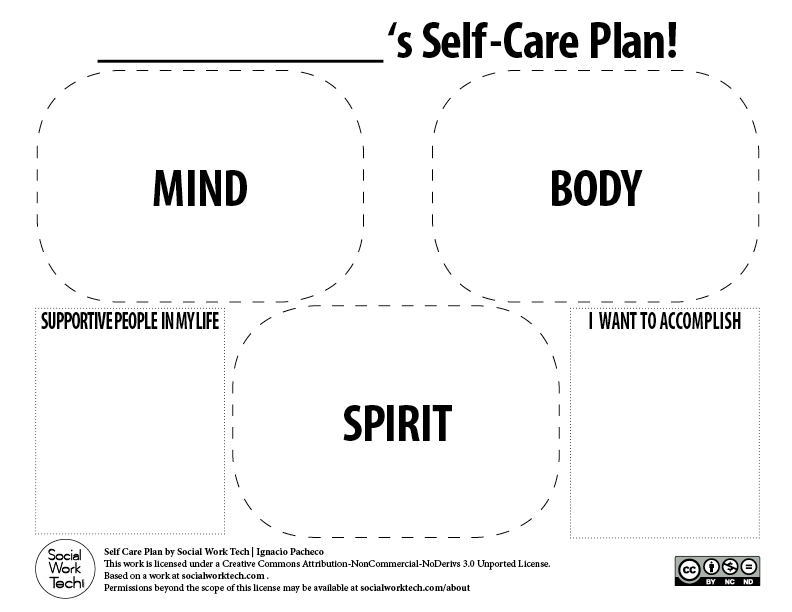
Below is a self-care plan template published by Social Tech.Com. Notice the three areas of focus are the mind, body, and spirit. These represent the three domains of life (work/home/relationships). To achieve a healthy balance, equal attention and nurturing must be given to all three areas. Too much stress, or too much time devoted to any one area can cause increased stress and lead to anger, irritability and outbursts.
For more information regarding anger management, stress management, and self-care please feel free to visit our website at www.nvamc.com or call 1-888-992-6479.

Monday, December 9, 2013
Is It Normal To Feel Angry?
Is anger normal? Absolutely! Everyone feels angry. It’s what we do with the feeling of anger that matters. Per George Anderson, LCSW, anger is a normal human emotion. In fact, anger is one of the first indications that a person may feel emotionally injured. It is important to note that anger is a secondary emotion that exists to protect people from feeling the more vulnerable emotions such as hurt, loss, grief, fear, offended, attacked, frightened, lonely or sad. This is not an uncommon response, often initiated by our psyche during times of stress in response to the more sensitive feelings.

However, anger also has very negative connotations, and when out of control is often associated with unhealthy and abusive aspects of the human condition. Anger maybe considered a problem when it is too intense, occurs too frequently, is harmful to self or others, lasts too long or leads to aggression. Unfortunately, as the economy continues to struggle and the cost of living remains sky high; incidents of unhealthy anger and aggression have increased ten fold worldwide. This increase is visible across all sectors of our society including government, politics, professional sports, business, education, and medicine.
If you or someone you love is experiencing unhealthy levels of anger or aggression, their emotional intelligence may no longer be effectively managed at the individual or family level, and may require voluntary and mandated training in stress management, anger management, communication and impulse control.
For more information about managing stressful emotions, please visit our website at www.nvamc.com, or call us at 1-888-992-6479.
Sunday, September 22, 2013
Seven Tips to Increase Your Emotional Intelligence & Reduce Angry Outbursts

• Master the use of assertive communication: Substitute “I
messages” in place of “You messages”, i.e., “I feel angry” as opposed to “You
make me so mad.” Stop blaming your
partner. You are responsible for your
feelings. Own them!
• Practice active listening: Quite simply put, stop talking, stop reacting, and listen! Instead,
ask yourself, what is my partner really saying? What is the underlying need
that is clearly not being met, and most likely the root of the concern? How can
I support my partner to meet the need?
• Learn to use empathy to connect
emotionally with others: Demonstrate awareness and concern
for the needs, wants, and desires of loved ones. Instead of focusing only on
yourself, consider how friends and family might be feeling.
• Commit to self-control at all
times: Self regulation! Take ownership
of your role in the relationship. Own your own actions, choices, and behaviors.
Following any emotional situation, ask yourself what went well, and what can I
do differently the next time?
• Practice monitoring your feelings
frequently during the day: Check in with yourself. How do I
feel? Am I tense? Do I have knots in my stomach? Are my fists clenched? Am I
grinding my teeth? Are my shoulders tight? Do I feel hot? If you answer yes to
any of the above, take a ten minute time out and do some slow deep breathing,
count backwards from ten, or run your hands under cold water while slowly
breathing in through your nose and out through your mouth.
• Learn to sense the feelings and
needs of others: Pay attention to your friends,
family, and loved ones. Do they appear upset? Sad? Hurt? Are there needs being
met? Life is never one sided. Everyone has needs, and when needs are not met
they become resentments that turn to anger that may be expressed inappropriately
or drive a wedge between you and your loved one.
• Learn to lead by example: Demonstrate the behaviors, communication style, and way of being
in the world you want to see more of from your friends, family, and loved ones.
We cannot expect anyone to interact differently than we ourselves are
displaying on a daily basis. Become the change you want to see!
Saturday, August 10, 2013
Naughty Kid or Necessary Skill?
It’s Saturday night, and you and your loved one are having dinner
in an upscale local restaurant. The steak is cooked to perfection, the salad
crisp and well chilled, the conversation pleasant. You take a bite of tender
succulent beef, and begin to quietly chew all the while thinking to yourself
the night could not be more perfect. Suddenly, at the table next to you, a young
child begins to act out. You hear the parents say “no” several times, and then
the volume of the outburst begins to increase. It is at this point you realize
the child is in the beginning of a full blown tantrum. Your stomach begins to
sink, as the parents attempt to calm the child, because the harder they try the
louder the child yells. The next thing you know, you hear the sound of skin
hitting skin, as the parents begin yelling at the child to “Stop it!” It is at
this point you find yourself loosing your appetite and wondering what is wrong
with the child, the parents, or both?
Throughout the ordeal
you find yourself vacillating between wondering how the parents could both hit
and yell at there child in public, why they would dare to bring an ill behaved
child to a restaurant, and why they haven’t taken the child out to the car. As the child continues to kick, bite, yell,
and scream you realize the horrific spectacle playing out next to you is far
more than the anger of a petulant child; frustrated and dismayed, you begin accept
that date night is well and truly over and that you may have witnessed inappropriate
discipline of a minor ( CA law states corporal punishment is only legal when it
is involves an open hand on a child’s bottom and does not leave a mark.)
We've all been there, and witnessing such a display it is
never pleasant. The important thing to remember is

In replaying the above scenario, what was truly witnessed
between the parents and the child? You
observed the child “acting out”, the parents saying “no”, the child not accepting
the answer, the parents hitting the child while yelling “stop it”, and the
child escalating to full tantrum with kicking, biting, and screaming. When
reviewing the incident, it becomes clear the child has learned to “turn up the
heat” to get needs met and as such is unable to accept limits due to negative
reinforcement of needs only met when escalated. Therefore, the child
demonstrates resilience in learning how to get daily needs met. Although
unpleasant to experience, the child’s naughty behavior is clearly a necessary
survival skill.

However, the parents’ behavior demonstrates a lack stress
management, displaced anger, inappropriate corporal discipline, a lack of emotional
intelligence, and poor parenting skills. How then could the situation have been
handled to generate a positive outcome? The National
Parenting Education Network recommends the following steps as a more
appropriate response to a child’s defiance, tantrums, angry outbursts, or
disruptive behavior when at home or in public:
1. State the rule
(Ex. in our family we don’t hit each other).
- 2. Time-out when a child chooses not to follow a rule. (One minute per year of age).
- 3. Use positive reinforcement when a child follows a rule.
- 4. Apply consequences in a consistent way (to make it easier use a prompt paired with a count of 3, and then move on with a time out when a child is not following a stated rule). A child eventually will expect to have negative consequences for negative behaviors. As parents, striving to teach good habits and values is a must.
- 5. Whenever parent can, he/she should celebrate positive behaviors to encourage and support desired changes (very important).
- 6. Make a plan with your child to celebrate when progress, so the child has something positive to look forward.
F
Sunday, August 4, 2013
Dumping My Bucket of Emotions Without An Angry Outburst!

For many people anger and
disruptive behavior are the result of internalized tension and resentment. In
short, anger represents mental and emotional fill points or bucket of emotion,
that have hit there limit and literally burst. So what is an emotional “fill
point” and how does it affect us? An emotional “fill point” is an imaginary
line used to represent how much stress and anger a person can accumulate before
these negative emotions start to “spill” out in an angry outburst.
Some people have a low fill
line, while others have a high one. Children, on the other hand, tend to have much lower fill lines than
adults, and as such care must be taken when interacting and setting and example
for them. When a child reaches their fill line, they tend to let all their
negative emotions spill out onto others in un- healthy ways. Disruptive
behavior, acting out, anger, irritability, and bullying are the most common
unhealthy ways that a child uses to try and relieve stress by playing out
emotions that they may not be able to verbally express. This is not only
devastating for the child, but also for the unintended victim of the angry lashing
out, be it family, a friend, classmates etc. The most important thing to remember
is that a child, unlike and adult, does not know their fill line; and as such, is unable to actively choose to reduce their
stress and negative emotions before they spill over onto others.

When a child’s
emotional bucket is full, it is up to the caregivers in their lives to help
them learn and begin to use healthy appropriate alternatives to angry out
bursts or they disruptive behaviors. Some effective tools to help children cope
with tension and stress dump are engaging activities including sports, Boys
& Girls Club, summer camp, etc, redirection such as color grounding (have
them choose a color in a room, then prompt them to point out how many places
they see the color), creating a coping box filled with manipulatives, guided
activities, music, slow deep breathing, taking space, etc. Adults, on the other
hand, are able to dump their emotional buckets and make healthy choices to
reduce their tension and anger without prompting; however, the same principles apply.
Appropriate ways for adults to reduce their emotional fill lines include going
to the gym, enrolling in Yoga, slow deep breathing, talking with a friend,
guided imagery, etc.
Whether a child or an adult,
healthy coping may take some practice, but recognizing and appropriately
relieving the anger, stress, and tension built up in an emotional bucket will
ultimately lead to a happier, calmer life.
For more information about healthy alternatives to managing anger, please visit www.nvamc.com, or call 1-888-992-6479 for a free consultation.
Monday, May 27, 2013
Explosive Rage In Teenage Boys At Alarming Rate

In an alarmingly upward trend, teenage boys are increasingly
acting out in horrific acts of violent and explosive rage. Per The Guardian, one such tragic event
occurred on 24 May 2013, at which time a 15 year old boy allegedly killed his
adopted brothers (http://guardianlv.com/2013/05/west-point-utah-15-year-old-boy-allegedly-kills-adopted-brothers-10-and-4/),
in a small town, in West Point, Utah. Similarly,
per The LA Times, in January 2013, a
15 year old boy in New Mexico confessed to having killed his mother, father,
and three small siblings (http://articl es.latimes.com/2013/jan/21/nation/la-na-nn-albuquerque-griego-shooting-20130121). Regrettably, these are not isolated
incidents. In direct response to this growing trend in teen violence, enlightened parents are seeking
anger management education classes for their sons. Further, as part of a
proactive trend toward emotional intelligence training, anger management classes
are replacing punishment for teenage boys whose aggressive anger is alarming both their
parents and school personnel. The ongoing negative economic trend has impacted
the mood and stress levels of adults, children, and adolescents nationwide.
Anger, stress, and aggressive behavior are some of the consequences associated
with dramatic changes in socio-economic status. To punish an angry teen often leads to further negative alterations in his or her behavior. In contrast,
anger management classes, which are focused on increasing an individual’s emotional
intelligence by teaching skills in self-awareness, self-control, social
awareness and relationships, are more likely to result in skill enhancement in
the pivotal areas mentioned above. In fact, due to the fragile ego of teens, psychotherapy is often viewed as extremely
threatening and as such generally produces poorer outcomes. Therefore,
emotional intelligence for skill enhancement, in managing anger and stress,
delivered in a group setting, is a far more popular intervention with teenage
boys and is more likely to produce positive outcomes.
For further information regarding anger management education for teenage boys displaying disruptive, or anti-social behavior, please visit our website at www.nvamc.mobi or call 1-888-992-6479.
Saturday, April 20, 2013
Anger & Fatigue: A Potential Recipe for Disaster!
 Fatigue is symptom of modern life; all of us feel it, some more than others. However, as common place as it is these days, have you ever found yourself wondering just what is this exhausted feeling all about? The Webster’s dictionary (www.webster.com) defines fatigue as "Extreme tiredness, typically resulting from mental or physical exertion or illness." There are many causes for it, work, family, money etc. In fact, per a recent article in Psychology Today (www.psychologytoday.com) it is during these times of extreme fatigue that we are much more likely to let our emotional mind rule us. Consequently, as a result of fatigue, we become too tired and too run down to really think before we act/speak, or care about the damage our angry behavior might cause in the future.
Ironically, as difficult as it may be, it is during these moments of extreme fatigue that we must be most vigilant about thinking our actions through and controlling our emotions. In short, the anger and resentment underlying our fatigue is not a product of a rationale mind, but is instead a purely emotional response to stress resulting from extreme fatigue. As hard as it is to endure, many of the hardships we face today, such as college and paying a mortgage, will make our future a little easier. Emotional
 control of our anger response during periods of fatigue may be hard to obtain at first, but conscious effort will soon come as naturally as breathing. With time, patience, and awareness we all can be successful in controlling out anger and redirecting it in positive ways even during periods of extreme fatigue. Although taxing and often overwhelming, don't give up the struggle to succeed in these modern times; ultimately, it will be worth it!
Monday, April 1, 2013
Understanding The Connection Between Emotional Intelligence & Anger

Emotional intelligence is a relatively new concept which
holds considerable promise in teaching us the skills to relate to each other
which leads to positive outcomes in many areas of human interaction. Currently
it is the newest rage in Human Resource and Organizational Development
consultation and training.
Emotional intelligence (EQ) is the capacity to create
positive outcomes in relationship to others and ourselves. It is the practice
of being aware, understanding, appropriately expressing and handling emotional
states in ourselves and others. Emotional intelligence is an important skill to
acquire because of its usefulness in leadership, sales, marriage and
interpersonal relationships at work, school and families. It is a skill which
can be developed and/or enhanced at any point in our lives.
Because EQ is essential in developing relational skills
it is one of the first concepts to be taught in mainstream anger intervention
programs, and is a core concept of which anger management tools are built upon.
Additional components in anger education include stress management,
communication and anger management. All of these four key concepts are woven
throughout the intervention process, and are introduced via direct instruction,
group exercises, videos and CDs. Consequently, this helps to teach participants
not only how to regulate their anger, but also how to manage stress and improve
communication while simultaneously enhancing their emotional intelligence.
Often times individuals initially enroll in anger
management class as a result of a referral from court, Human Resources,
Employee Assistance Programs, or spouse. However, once in the class, he or she
will quickly recognizes the value of using these skills in all other aspects of
his or her daily functioning. EQ is by far the most popular of the four modules
mentioned above. EQ is closely related to empathy, sensitivity to others,
compassion and self awareness. It is what distinguishes persons who make you
feel comfortable, optimistic, laugh and feel good about yourself from those who
you avoid because their negativism is contagious and tends to cause you to feel
gloom and discomfort.
Currently, in the United States, Canada , England and
Bermuda, the largest number of non court related referrals to anger management
programs are from businesses, and governmental agencies, including Hospitals.
These organizations recognize the effect of relational challenges on the bottom
line i.e., productivity, profit, and good morale. Understanding the powerful
role of emotions in the workplace sets the best leaders apart from the rest not
just in tangibles, such as better results and the retention of talent, but also
in the all-important intangibles, such as higher morale, motivation, and
commitment.
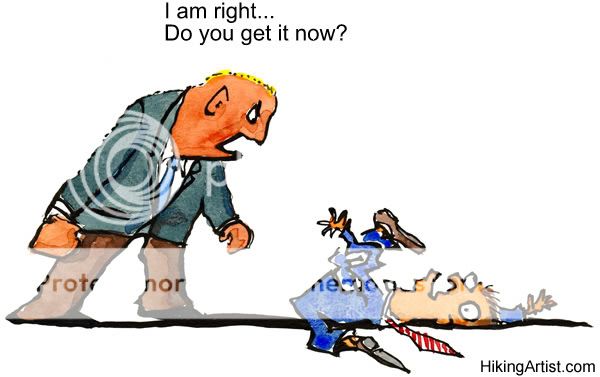 In fact, just as laughter offers a ready barometer of EQ
at work so to does rampant anger, fear, apathy, or even sullen silence signals
the opposite. In a recent informal survey of more that a thousand U.S. workers,
over 40 percent reported incidences of yelling and other kinds of verbal abuse in
their workplaces, and approximately 32 percent admitted to having yelled at a
co-worker themselves. Such disturbing encounters wreak havoc emotionally, as demonstrated
via negative physiological responses such as increased stress levels, more
frequent accidents, etc. Verbal attacks send the painful emotional messages of disgust,
or contempt, thus emotionally hijacking the person targeted, particularly when
the attack is a spouse or boss, whose opinions carry much weight.
In fact, just as laughter offers a ready barometer of EQ
at work so to does rampant anger, fear, apathy, or even sullen silence signals
the opposite. In a recent informal survey of more that a thousand U.S. workers,
over 40 percent reported incidences of yelling and other kinds of verbal abuse in
their workplaces, and approximately 32 percent admitted to having yelled at a
co-worker themselves. Such disturbing encounters wreak havoc emotionally, as demonstrated
via negative physiological responses such as increased stress levels, more
frequent accidents, etc. Verbal attacks send the painful emotional messages of disgust,
or contempt, thus emotionally hijacking the person targeted, particularly when
the attack is a spouse or boss, whose opinions carry much weight. Saturday, March 2, 2013
Surviving & Thriving With An Angry Teen

Have you ever found yourself wondering why today’s teenagers are so angry? Relatively speaking, most people have a certain degree of near constant anger. This is usually caused by underlying fears, frustrations, and anxiety concerning work or financial issues. Another often significant factor contributing to anger and frustration may be present if we struggle in our relationships with other people. However, if you add the mix of volatile hormone levels, testing your place in society and being stuck in that awkward half child/ half adult stage, it is no wonder that teens end up being known for wicked tempers and out of the blue mood swings. Needless to say, dealing with them is confusing and exhaustive at the best of times, even for other teens. So what are some of the triggers that may be pushing teenagers beyond their ability to safely deal with their emotions? Many teens report feeling overwhelmed just trying to cope with school and chores, in addition to friends and family. However, when you consider that when many also hold part time jobs, which leaves very little time for the things they enjoy, we start to see a pattern. Overscheduling is a common thread in the fast moving lives of today’s angry teen. In fact, being overscheduled often leads teenagers to lash out more frequently, inappropriately dumping their anger and excess emotions onto people they think of as safe. It is important to realize that this is not a healthy way to deal with anger; it is unfair to both the teen and the person, or people, being used to release their anger on. So what can be done to help teens find a healthy way to deal with anger? Downsizing their daily schedule is always a good start. In addition, studies show that the same anger management techniques that adults use work equally well with teens. As with any behavior, change takes time to start producing positive results. Consequently, with teens, who are often more reluctant to acknowledge their personal responsibility in any situation, it is important to remember that time, patience, a sense of humor and an air of supportive understanding will make the transition much more pleasant.

For more information about helping teens cope with anger, or other anger management and domestic violence programs, please visit our website at www.nvamc.com, or call us today at 1-888-992-6479.
Saturday, February 9, 2013
Four Simple Tips for Managing Anger
Four Simple Tips for Managing Anger
The four, simple, proven secrets to anger management are:
• Self-awareness
• Self-control
• Social -awareness
• Relationship-management
For assistance managing emotional re-activity anger, or other aggression related concerns, please visit our website www.nvamc.com, or call us at 1888-992-6479.
North Valley Anger Management Consultants
www.nvamc.com
DYNAMIC MEDITATION DVD (DVD) (Google Affiliate Ad)
www.thecaamp.com
[CD] Mantra Meditation for Physical Health By Ashley-Farrand, Thomas (Google Affiliate Ad)
www.theccbi.com
Natural Fitness Eco-Smart Yoga Mat (Google Affiliate Ad)
MEDITATION FOR BEGINNERS (DVD) (Google Affiliate Ad)
Monday, January 28, 2013
Edward Furlong & Milton Bradley Demonstrate The Need For Anger Management
Edward Furlong & Milton Bradley Demonstrate the Need for Anger Management
 Anger is one of the most misunderstood and overused of human emotions. Anger is not a planned action – it’s a reaction to an inner emotion. Anger is energy. It serves a purpose by giving people the drive and determination to cope with the often difficult situations we find ourselves in. Anger helps discharge tension. If handled well, anger can help resolve conflict and improve relationships with others. Anger is an easy emotion to show; everyone gets angry.
However, what everyone doesn’t do is explode with public displays of person-directed anger in their relationships, custody disputes, or sporting events. While anger is a normal human emotion, the displays of verbal aggression and anger recently demonstrated by Furlong represents unhealthy anger, which destroys interpersonal relationships as well as the reputation of the perpetrator.
There are six situations in which anger is unacceptable in a civil society:
 1). When it is too intense.
3). When it lasts too long.
4). When it leads to person-directed aggression or violence.
For help dealing with unhealthy levels of anger or rage, please visit our website or call us for a free consultation.
North Valley Anger Management Consultants
www.nvamc.com
1-888-992-6479

However, what everyone doesn’t do is explode with public displays of person-directed anger in their relationships, custody disputes, or sporting events. While anger is a normal human emotion, the displays of verbal aggression and anger recently demonstrated by Furlong represents unhealthy anger, which destroys interpersonal relationships as well as the reputation of the perpetrator.
There are six situations in which anger is unacceptable in a civil society:

2). When it occurs too frequently.
3). When it lasts too long.
4). When it leads to person-directed aggression or violence.
5). When it destroys interpersonal relationships.
6). When it has health implications.
North Valley Anger Management Consultants
www.nvamc.com
1-888-992-6479
Monday, December 31, 2012
Emotional Intelligence: The Foundation of Hope

To that end, the majority of human beings at some point in their lives will ask, “Why am I here?” It is this very dilemma that instills a sense of lacking within humanity.

Humanity, regardless of culture, has an instinctive need to believe they belong and as such are part of something that is bigger and stronger that is on their side, and in their corner; an omnipotent figure if you please, that will unconditionally love, support, and forgive them no matter what. Humankind must believe that they are not alone in this world, and that they are living for a reason; a reason that has its basis in hope.
For information regarding our services, please visit our website at www.nvamc.com, or call us at 1-888-992-6479.
Happy New Year!
North Valley Anger Management Consultants
Tuesday, December 25, 2012
Anger: A Normal Human Emotion
 Per George Anderson, LCSW, anger is a normal human emotion. Consequently, our anger is one of the first indications that we have sustained an emotional injury that causes us to feel, hurt, offended, attacked, frightened or sad. This is not an uncommon response to more vulnerable feelings. In fact, anger even has a positive side to it. Some examples of the positive uses of anger include Martin Luther King and his struggles to end discrimination in America, Nelson Mandela (www.nelsonmandela.org) whose struggle against South Africa mobilized most of the world against his adversaries, and Rosa Parks whose anger was the source of the Montgomery Bus Boycott. Another example of a positive outcome in sighted by anger is that of Mahatma Gandhi, whose anger and resulting passive resistance stance against England occurred in direct response to Britain’s domination of India.
  However, anger also has very negative connotations, and is often associated with unhealthy and abusive aspects of the human condition. Anger maybe considered a problem when it is too intense, occurs too frequently, is harmful to self or others, lasts too long or leads to aggression. Unfortunately, as the economy continues to struggle and the cost of living remains astronomical, there has been an increase in unhealthy anger and aggression worldwide. This increase is visible across all sectors of our society including government, politics, professional sports, business, education, and medicine.
Therefore, emotional intelligence may no longer be effectively managed at the individual or family level, but may require voluntary and mandated training in stress management, anger management, communication and impulse control.
For more information about managing stressful emotions, please visit our website at www.nvamc.com, or call us at 1-888-992-6479.
Sunday, December 2, 2012
Are Anger & Abuse Pre-requisest for Love?

One of the most powerful concepts to implement in any relationship is UNCONDITIONAL LOVE. So the question truly becomes how you define unconditional love, and what are you willing to do to mend the hurt and pain you are currently feeling without passing blame onto the other person. Each person must communicate their love in a calm, clear, and direct, fashion in order to demonstrate respect to their partner. Our emotions have an amazing ability to unite people; however, left unchecked, they possess the same propensity to divide us.
Daniel Goldman(http://www.mbni.med.umich.edu/mbni/faculty/goldman/goldman.html) defines EMPATHY, which is a significant factor involved in unconditional love, in three ways. The first is cognitive empathy, meaning that we can understand how the other person thinks; we see his or her point of view. He states "this makes for good debaters, sales people and negotiators. On the other hand, people who have strengths in cognitive empathy alone can lack compassion – “they get how you see it, but don't care about you". The second is emotional empathy, which refers to someone who feels within herself the emotions of the person he or she is with. Goldman states "this creates a sense of rapport, and most probably entails the brain's mirror neuron system, which activates our own which in turn circuits the emotions, movements and intentions we see in the other person". This type of empathy creates opportunities of compassion and love. Consequently, this is where the third type of empathy, empathic concern, comes into play. Empathic concern "means we not only understand how a person sees and feels in the moment, but also prompts us want to help them if we sense the need". This unlocks the door to true empathy and unconditional love.
As you read this article, can you think of an experience where someone demonstrated Unconditional Love? What area of empathy do you most find yourself demonstrating (cognitive empathy, emotional empathy, or empathic concern)? Do you believe you have to hurt or be hurt to receive love?
 If you are in a relationship in which you are hurting the ones you love physically, emotionally, or mentally we can help. For more information and a free consultation, please call 1-888-992-6479 or visit our website at www.nvamc.com today. Help is just a phone call away!
For additional resources, including assistance with a safety plan, please call the national domestic violence hotline at 1-800-787-3224 or visit their website at http://www.thehotline.org/ today.
Sunday, February 26, 2012
How To Spot a Bully In Your Child's Life
 Would you know if your child was being bullied? Often bullying goes unreported and undetected, yet the damage is still done and can have life altering effects. In 2009, Finkelhor, Turner, Ormrod,&Hamby conducted a national study of
Comes home with torn, damaged, or missing pieces of clothing, books, or other belongs
Has unexplained cuts, bruises, scratches
Has few, if any friends, with whom they spend time
Seems afraid of going to school, walking to and from school, riding the bus, or taking part in organized activities with peers
Takes a long, illogical, route to school
Has lost interest in, or suddenly begins to do poorly at school
Appears sad, moody, teary, or depressed when they come home from school
Complains of frequent headaches, stomachaches, or other physical symptoms
Has trouble sleeping or has frequent bad dreams
Demonstrates a loss of appetite
Appears anxious and suffers from low self esteem
Learning how to recognize the symptoms may save a life. Know the signs and stop bullying today!
For more information please visit www.cde.ca.gov/ls/ss/se/bullyres.asp
For more information please visit www.cde.ca.gov/ls/ss/se/bullyres.asp
Sunday, February 12, 2012
The "Anger Trap"
Avoiding the "Anger Trap" is an important skill to have in your communication tool box, and is one that is often over looked. Navigating the slippery slope of interpersonal relations is never easy, but with a little help you will be stirring the communication course like a pro.
 An "Anger Trap" is the emotional mine field of any interaction that involves one party being denied something that they want. Yes, this happens all the time, all over the world, in ever aspect of life from the home to the cooperate board room. The result of getting caught in one of these traps, most especially in the business world, can often be a fast trip to anger management class. So what is the infamous trap, and how do you avoid it? An "Anger Trap" is sprung when the party being denied is able to hook the denier into justifying the denial and in so doing begins to exploit the deniers guilt. At this point, the denier becomes angry in response to the emotions associated with the guilt, and thus a successful 'anger trap' has been sprung. Avoiding the trap then becomes a matter of the denier being able to establish clear boundaries and effectively managing their communication of the denial. In short, the denier must avoid engaging in explanations by using clear, concise commands coupled with immediate disengagement from the conversation. This does not mean forgoing politeness, but it does mean remaining in control of the conversation. For more information about our services including anger management, interpersonal communication, stress management, avoiding the "Anger Trap", emotional intelligence, etc., please visit our website at www.nvamc.com or call 888-992-6479.
Sunday, March 20, 2011
Emotional Intelligence & Anger
Emotional Intelligence & Anger
According to Wikipedia, "the earliest roots of emotional intelligence (EQ) can be traced to Darwin's work on the importance of emotional expression for survival and second adaptation. In the 1900s, even though traditional definitions of intelligence emphasized cognitive aspects such as memory and problem-solving, several influential researchers in the intelligence field of study had begun to recognize the importance of the non-cognitive aspects. For instance, as early as 1920, E.L. Thorndike used the term social intelligence to describe the skill of understanding and managing other people.
Similarly, in 1940 David Wechsler described the influence of non-intellective factors on intelligent behavior, and further argued that our models of intelligence would not be complete until we can adequately describe these factors. In 1983, Howard Gardner'sFrames of Mind: The Theory of Multiple Intelligences introduced the idea of multiple intelligences which included both interpersonal intelligence (the capacity to understand the intentions, motivations and desires of other people) and intrapersonal intelligence (the capacity to understand oneself, to appreciate one's feelings, fears and motivations). In Gardner's view, traditional types of intelligence, such as IQ, fail to fully explain cognitive ability. Thus, even though the names given to the concept varied, there was a common belief that traditional definitions of intelligence are lacking in ability to fully explain performance outcomes."
Anger is a primitive emotion that all human beings experience. However, it is important to note that anger can also have a very disruptive effect on one's emotional intelligence (EQ). One technique that may be of assistance with re-empowering the intelligence aspect of one's psyche is anger management. Through the use of an evidenced based anger management program, students are taught to utilize thought (intelligence) to circumvent feelings (emotion) from negatively influencing actions. Although anger is hard wired into the reptillian brain, it does not have to over ride emotional intelligence (EQ). To reclaim control and increase your EQ, consider employing thought stopping, relaxation techniques, as well as increasing verbal expression all of which have become components of successful anger management programs.
For more information about anger management and it's ability to assit individuals with increasing their emotional intelligence visit www.nvamc.com or call 888-892-6479 today.
Anger is a primitive emotion that all human beings experience. However, it is important to note that anger can also have a very disruptive effect on one's emotional intelligence (EQ). One technique that may be of assistance with re-empowering the intelligence aspect of one's psyche is anger management. Through the use of an evidenced based anger management program, students are taught to utilize thought (intelligence) to circumvent feelings (emotion) from negatively influencing actions. Although anger is hard wired into the reptillian brain, it does not have to over ride emotional intelligence (EQ). To reclaim control and increase your EQ, consider employing thought stopping, relaxation techniques, as well as increasing verbal expression all of which have become components of successful anger management programs.
For more information about anger management and it's ability to assit individuals with increasing their emotional intelligence visit www.nvamc.com or call 888-892-6479 today.
Sunday, January 16, 2011
How Do You Know It Is Time for Anger Management?
When is it Time for Anger Management?

If you, or someone you care about:
- Have late night arguments with a spouse or partner, and wind up saying very hurtful things, they wish they could take back in the morning
- Seem to be able to contain negative feelings most all of the time, but occasionally lose it and let certain people have it
- Does not respond back when people say things or do things that make me angry, but later think about a lot of great ways they should have responded to them
- Struggle to go to sleep at night because of things that really bothered and upset them during the day
- Find it difficult to forgive people when they have been wronged
We see people everyday coming into our office from all walks of life because ANGER IS THE GREAT EQUALIZER in society. It is a basic human emotion that we all have. The key is not to suppress or ignore it, but to learn skills to manage, contain, and prevent ourselves from acting or speaking inappropriately. The good news is that these skills of Emotional Intelligence can be learned and developed. In addition, Emotional Intelligence (commonly called EQ) is more closely correlated with success in relationships and in careers than a person’s Intelligence Quotient (or IQ). We utilize an evidence-based, skill-building curriculum to accelerate each individual’s EQ learning curve across key domains like interpersonal assertion, empathy, stress management, interpersonal aggression, and interpersonal deference. Most clients that come to us see great results in 12 to 16 sessions. For more information, or for a confidential appointment, please call (888) 992-6479 or check us out on the web at www.nvamc.com.
Subscribe to:
Posts (Atom)